Rama Dental Clinic
Why Your Tooth Hurts Even Without a Cavity
You brush twice a day, you floss (mostly), and your last check-up didn't turn up a single cavity. So why does your tooth still ache?
It's one of the most confusing dental complaints out there. Most people associate tooth pain with decay, so when a dentist says “there's no cavity here,” the pain itself can start to feel almost illogical. But tooth pain isn't always about holes in your enamel. It can come from your gums, your jaw, your sinuses, or even a nerve that's simply overreacting.
If you've been searching for the best dentist in Lucknow to figure out what's really going on, this guide walks you through the most common non-cavity causes of tooth pain, how they're diagnosed, and what you can do about them.
Common Causes of Tooth Pain Without a Cavity
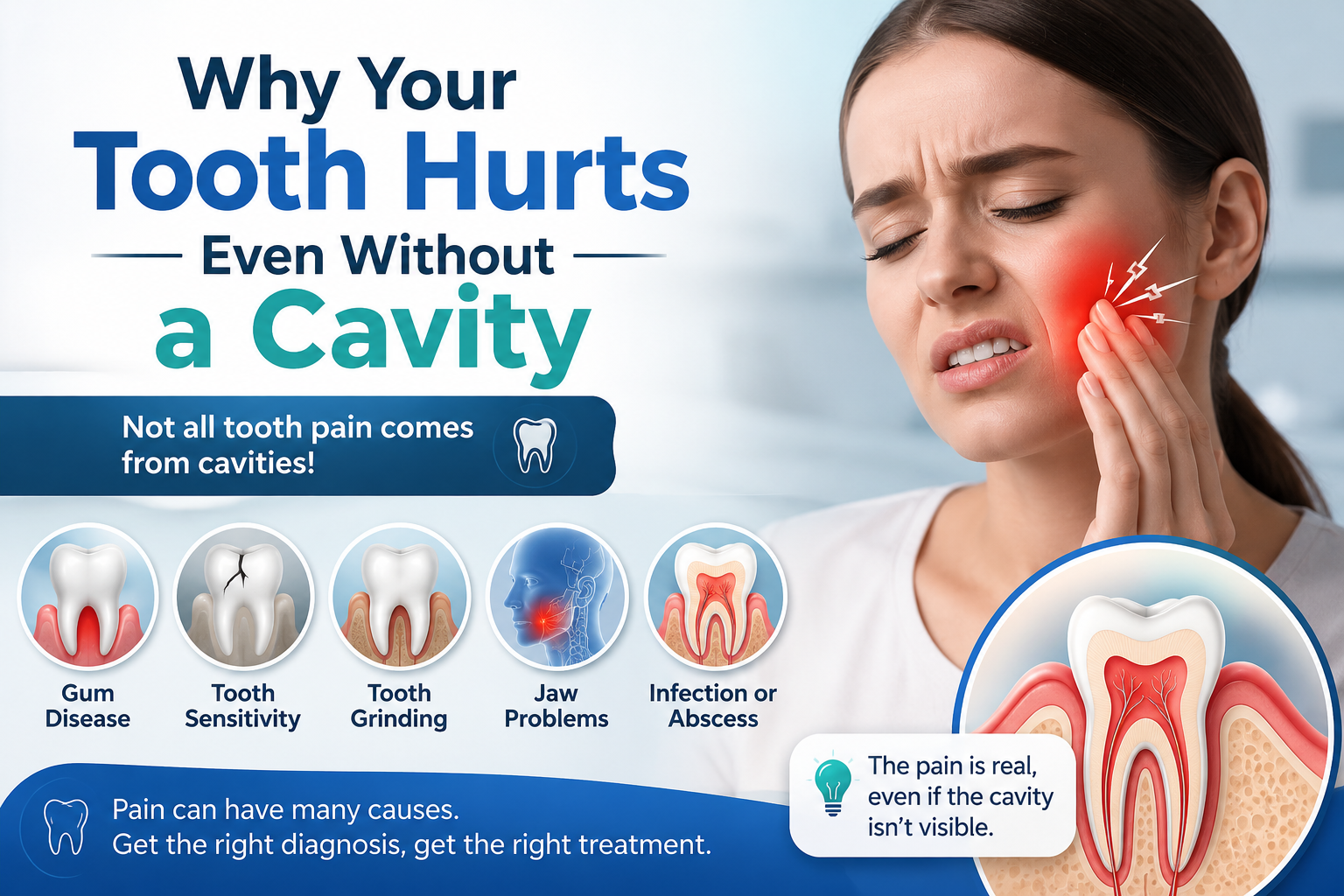
1. Gum Disease
Swollen, bleeding, or receding gums are often the real source of “tooth” pain. Early gum disease (gingivitis) can cause tenderness around the base of a tooth, while advanced gum disease (periodontitis) can expose the root surface, making teeth painfully sensitive to hot, cold, and pressure.
Typical symptoms:
- Gums that bleed when brushing or flossing
- Redness or puffiness along the gumline
- A dull ache that worsens when chewing
- Bad breath that doesn't go away
2. Tooth Sensitivity
Sensitivity happens when the protective enamel wears thin or the gums recede, exposing the softer layer underneath called dentin. This layer has tiny tubules that connect straight to the nerve, so even a sip of cold water can send a sharp jolt through the tooth.
Common triggers include:
- Cold drinks or ice cream
- Hot beverages
- Sweet or acidic foods
- Cold air while talking or breathing through your mouth
3. Cracked or Fractured Teeth
A crack doesn't always show up on an X-ray, especially in its early stages, which is exactly why “cracked tooth syndrome” is so often mistaken for something else. The pain is usually inconsistent—it flares up when you bite down in a certain way and then disappears just as quickly.
Cracks can happen from:
- Chewing on ice, hard candy, or pens
- An old, large filling weakening the tooth structure
- Grinding or clenching over time
- A blow to the face or jaw
4. Teeth Grinding (Bruxism)
Many people grind or clench their teeth at night without realizing it. This constant pressure can inflame the ligaments around the tooth root and strain the jaw muscles, leading to a dull, generalized ache—especially first thing in the morning.
Signs you might be grinding:
- Jaw soreness or stiffness on waking
- Flattened or worn-down tooth edges
- Headaches near the temples
- A partner mentioning grinding noises at night
5. Sinus Infections
Your upper back teeth sit close to your sinus cavities, so sinus pressure from a cold, allergies, or an infection can feel exactly like tooth pain. This type of ache usually affects several upper teeth at once rather than a single tooth, and it often gets worse when you bend forward or tilt your head down.
6. Impacted Wisdom Teeth
Wisdom teeth that are stuck below the gumline or growing at an angle can push against neighboring teeth, causing pain that radiates through the jaw. This is especially common in the late teens and twenties, and it can come with swelling, jaw stiffness, or difficulty opening your mouth fully.
7. Nerve-Related Issues
Sometimes the nerve inside a tooth becomes inflamed or irritated even without visible decay—this can happen after a deep filling, a past injury, or simply from age-related wear. In rarer cases, pain that seems to come from a tooth is actually referred pain from a nerve condition affecting the face or jaw, such as trigeminal neuralgia.
How Dentists Diagnose Non-Cavity Tooth Pain
Since the cause isn't always visible to the naked eye, an experienced dentist will usually combine several diagnostic methods:
- Visual and physical examination of teeth, gums, and bite alignment
- X-rays to check for cracks, bone loss, or hidden issues below the gumline
- Bite tests using a small stick or tool to pinpoint a cracked tooth
- Percussion and temperature tests to check nerve sensitivity
- Sinus evaluation if the pain pattern suggests a sinus connection
- Jaw and muscle assessment to check for grinding-related strain
This is exactly why choosing the best dental clinic in Lucknow matters—accurate diagnosis depends on experience, the right imaging tools, and a dentist who takes the time to rule out every possibility instead of guessing.
Treatment Options
Treatment depends entirely on the underlying cause:
- Gum disease: Professional cleaning, scaling and root planing, and improved home care
- Sensitivity: Desensitizing toothpaste, fluoride treatments, or a protective coating on exposed roots
- Cracked teeth: Bonding, a dental crown, or in severe cases, root canal treatment
- Bruxism: A custom night guard, stress management, and correcting bite alignment
- Sinus-related pain: Treating the underlying sinus infection, often with your physician's help
- Impacted wisdom teeth: Monitoring, or extraction if they're causing pain or crowding
- Nerve issues: Root canal therapy if the nerve is inflamed, or referral to a specialist for nerve-specific conditions
Prevention Tips
- Use a soft-bristled toothbrush and avoid aggressive brushing
- Don't chew ice, pens, or hard candy
- Wear a night guard if you grind your teeth
- Treat allergies and sinus infections promptly
- Keep up with regular dental check-ups, even without visible symptoms
- Avoid ignoring mild, recurring discomfort—early diagnosis is easier to treat
When to Visit a Dentist
Don't wait out the pain if you notice:
- Discomfort that lasts more than a couple of days
- Pain that worsens with hot, cold, or biting pressure
- Visible swelling in your gums, face, or jaw
- A tooth that suddenly feels loose
- Pain accompanied by fever, which could signal infection
Even mild, occasional pain is worth mentioning at your next visit—catching a hairline crack or early gum disease now can save you from a much bigger, more expensive problem later.
FAQs
1. Can a tooth hurt without any visible damage?
Yes. Pain can originate from the gums, nerves, sinuses, or jaw muscles even when the tooth itself looks completely healthy on the surface.
2. Why does my tooth hurt only when I bite down?
This is a classic sign of a cracked tooth or a loose filling. The pain typically appears with pressure and eases once you stop biting.
3. Can stress cause tooth pain?
Yes, indirectly. Stress often leads to teeth grinding or jaw clenching, both of which can cause tooth and jaw soreness over time.
4. How do I know if it's a sinus issue and not a tooth problem?
Sinus-related pain usually affects several upper teeth at once, worsens when you bend forward, and often comes with other cold or allergy symptoms.
5. Is tooth sensitivity a sign of a serious problem?
Not always, but persistent or worsening sensitivity should be checked, since it can point to gum recession, enamel wear, or an early crack.
6. Do wisdom teeth always need to be removed if they're causing pain?
Not necessarily. Some impacted wisdom teeth can be monitored, but extraction is often recommended if they're causing recurring pain, infection, or crowding.
7. When should I stop waiting and see a dentist?
If pain lasts more than two to three days, keeps you up at night, or comes with swelling or fever, it's time to get it checked rather than wait it out.
Book an Appointment with the Best Dental Clinic in Lucknow
Tooth pain without a cavity is still your body telling you something isn't right—and the only way to know for sure is a proper examination. Whether it's gum disease, a hidden crack, grinding, or a sinus connection, an accurate diagnosis is the first step toward lasting relief.
If you're searching for the best dentist in Lucknow to get to the bottom of your tooth pain, the team at Rama Dental Clinic & Implant Centre is here to help with a thorough evaluation and a treatment plan built around your specific cause. Book your appointment today and let's find out exactly why your tooth hurts—and fix it for good.
Explore More Blogs
Zinc series 1
Zinc is a nutrient that plays many vital roles in your body. Because your body doesn't naturally produce zinc, you must obtain it through food or supplements.
Read MoreWhat Is a Dental Implant and Who Needs It?
Losing a tooth can affect the way you eat, speak, and smile. It can also lower your confidence. But thanks to modern dental treatments, there's a strong and long-lasting way to replace missing teeth — dental implants.
Read MoreWhy Dental Implants Can Be Your Best Option?
Have you lost a tooth or multiple teeth through an accident or an oral disease? Do your missing teeth make it uncomfortable for you to laugh in public?
Read More