Rama Dental Clinic
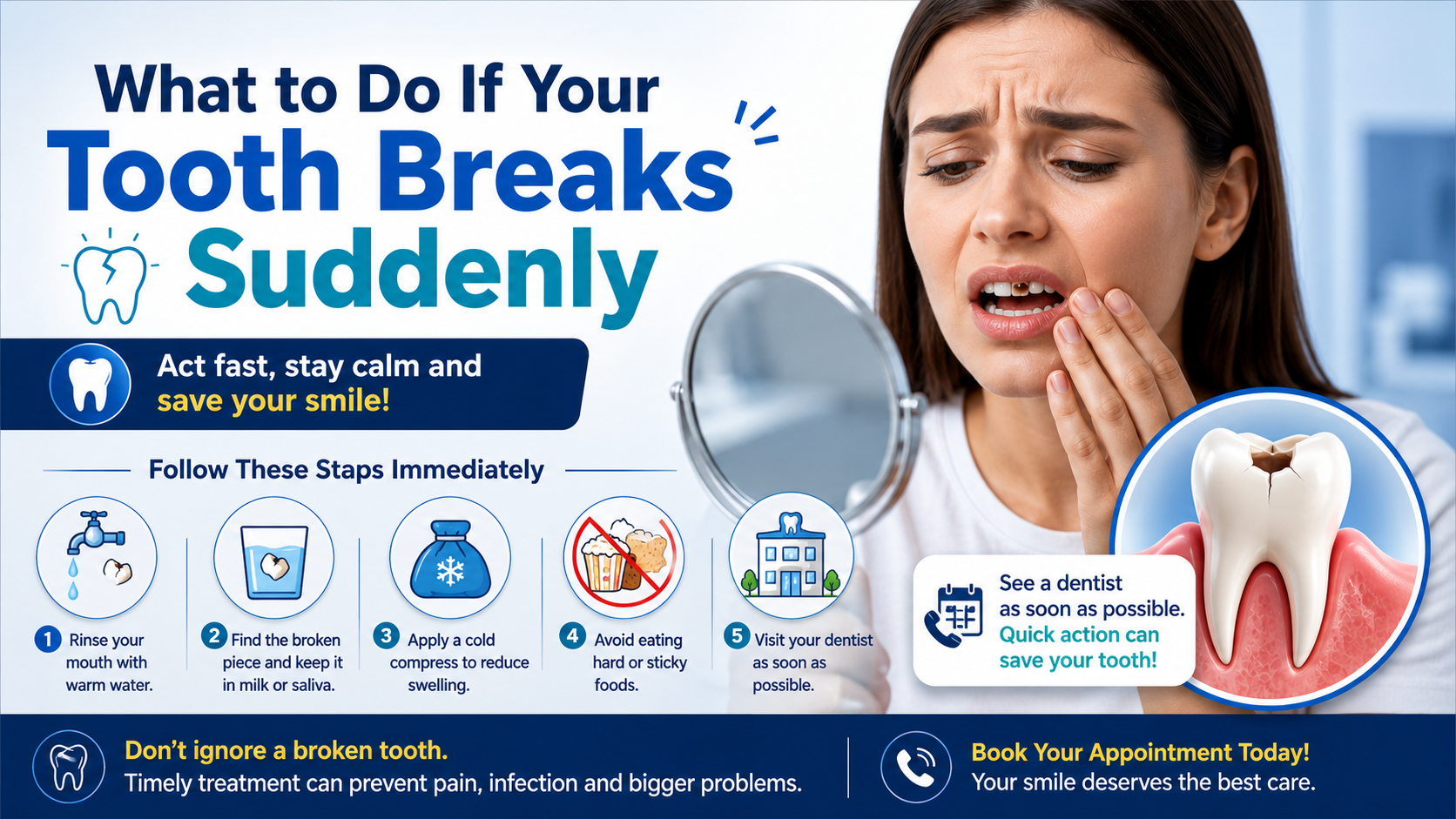
What to Do If Your Tooth Breaks Suddenly
One bite into something hard, one unexpected fall, or one hit during a game—and suddenly a piece of your tooth is gone. It's alarming, sometimes painful, and it always seems to happen at the worst possible moment.
The good news is that a broken tooth is rarely as catastrophic as it feels in the first few minutes. What matters most is what you do right after it happens. Acting quickly and correctly can be the difference between a simple repair and a much longer, more complicated treatment.
If you're dealing with a chipped, cracked, or broken tooth and searching for the best dentist in Lucknow, here's exactly what to do—step by step.
Common Causes of a Broken Tooth
Teeth are strong, but they're not indestructible. A break usually happens because of a combination of pressure and a weak point in the tooth structure.
Frequent causes include:
- Biting down on something hard, like ice, nuts, or a bone
- A fall or direct blow to the face during sports or an accident
- Untreated cavities that hollow out and weaken the tooth from within
- Large, old fillings that no longer support the remaining tooth structure
- Chronic teeth grinding (bruxism) that gradually wears down enamel
- Age-related brittleness, since enamel naturally thins over time
Immediate First-Aid Steps to Take
The first ten to fifteen minutes matter. Staying calm and following the right steps can protect the tooth and reduce pain until you reach a dentist.
- Rinse Your Mouth Gently – Use warm water to rinse away any blood or debris so you can see the extent of the damage clearly.
- Save Any Broken Pieces – If a fragment of the tooth has come out, place it in a small container with milk or your own saliva. Don't let it dry out—your dentist may be able to reattach it.
- Control the Bleeding – Press a clean piece of gauze or a damp tea bag against the area for about 10 minutes if there's bleeding.
- Manage Swelling and Pain – Apply a cold compress to your cheek near the affected tooth in 15-minute intervals. This helps limit swelling and numbs the discomfort slightly.
- Cover Any Sharp Edges – A broken tooth can leave a jagged edge that cuts your tongue or inner cheek. Dental wax (or even sugar-free chewing gum in a pinch) can temporarily cover the sharp area.
- Take an Over-the-Counter Pain Reliever – A standard pain reliever can help manage discomfort until you're seen by a dentist. Avoid placing aspirin directly on the gum, as this can burn the tissue.
What to Avoid After a Tooth Breaks
Certain instinctive reactions can actually make things worse. Steer clear of these:
- Don't chew on the affected side, even if it doesn't hurt much yet
- Don't ignore mild pain, thinking it will resolve on its own
- Don't try to glue or repair the tooth yourself with household adhesives
- Don't eat very hot, cold, or sugary foods, since the exposed area is often sensitive
- Don't delay your dental visit, even if the break looks small from the outside
When a Broken Tooth Becomes a Dental Emergency
Not every chip needs a same-day visit, but certain signs mean you shouldn't wait:
- Severe, throbbing pain that doesn't ease with medication
- Visible bleeding that doesn't stop after 10–15 minutes
- A tooth that feels loose or has been knocked out of position
- Swelling in the face or jaw
- A visible pulp exposure (a pink or reddish center inside the broken tooth)
- Fever, which could indicate a spreading infection
If any of these apply to you, it's best to reach out to the best dental clinic in Lucknow right away rather than waiting for a routine appointment slot.
Treatment Options for a Broken Tooth
Your dentist will choose a treatment based on how much of the tooth is affected and whether the nerve is involved.
- Dental Bonding: For small chips, a tooth-colored composite resin is applied and shaped to restore the tooth's natural look. This is usually quick and doesn't require multiple visits.
- Fillings: If the break is a bit deeper but the tooth structure is still largely intact, a filling can restore both function and appearance.
- Dental Crowns: When a significant portion of the tooth is broken, a crown covers and protects what remains, restoring strength and shape. Crowns are especially common after a large break or when a tooth has had extensive previous treatment.
- Root Canal Treatment: If the break extends deep enough to expose or tooth damage the nerve, root canal treatment is usually necessary to remove the infected or inflamed tissue before the tooth is restored with a crown.
- Veneers: For minor chips on front teeth that affect appearance more than function, a veneer can restore a natural, even smile.
- Dental Implants: If the tooth is broken beyond repair or the root is too damaged to save, extraction followed by a dental implant may be recommended to replace the tooth completely.
Recovery Tips After Treatment
- Stick to soft foods for the first day or two after any restorative procedure
- Avoid chewing directly on the treated tooth until your dentist confirms it's fully set
- Maintain gentle brushing and flossing around the area to prevent infection
- Watch for unusual sensitivity and mention it at your follow-up visit
- Attend all follow-up appointments, especially after a crown or root canal
Preventive Measures
- Wear a mouthguard during sports or high-impact activities
- Avoid chewing ice, hard candy, or opening packaging with your teeth
- Treat cavities and worn fillings before they weaken the tooth further
- Use a night guard if you grind your teeth
- Keep up with regular dental check-ups so small weaknesses are caught early
FAQs
1. Can a broken tooth heal on its own?
No. Tooth structure doesn't regenerate, so a break needs professional treatment to restore its shape, strength, and protection against further damage.
2. Is a chipped tooth always painful?
Not always. Minor chips may not hurt at all, but they should still be checked, since even small breaks can weaken the tooth over time.
3. What should I do if my tooth breaks at night when clinics are closed?
Follow the first-aid steps—rinse, save any fragments, manage bleeding and swelling—and book the earliest available appointment the next morning.
4. Will I need a root canal for every broken tooth?
No. Root canal treatment is only needed if the break exposes or damages the nerve inside the tooth. Many chips are treated with bonding or a filling alone.
5. How long does treatment for a broken tooth usually take?
Simple bonding can often be completed in a single visit, while crowns or root canals may require two or more appointments depending on the case.
6. Can I still eat normally after my tooth is repaired?
Yes, though your dentist may recommend avoiding very hard or sticky foods for a short period, especially after a crown or bonding procedure.
7. How can I tell if a broken tooth is a dental emergency?
Severe pain, visible bleeding, swelling, a loose tooth, or visible nerve exposure are all signs you should seek care immediately rather than waiting.
Visit the Best Dental Clinic in Lucknow for Prompt Care
A broken tooth can feel alarming in the moment, but with the right first-aid steps and timely treatment, most cases are fully restorable. What matters most is not waiting—delaying treatment can turn a simple fix into a more complex procedure.
If you're dealing with a chipped, cracked, or broken tooth, the team at Rama Dental Clinic & Implant Centre is ready to provide prompt diagnosis and the right treatment for your situation. Don't wait for the pain to worsen—book your appointment with the best dentist in Lucknow today and get your smile back on track.
Explore More Blogs
Zinc series 1
Zinc is a nutrient that plays many vital roles in your body. Because your body doesn't naturally produce zinc, you must obtain it through food or supplements.
Read MoreWhat Is a Dental Implant and Who Needs It?
Losing a tooth can affect the way you eat, speak, and smile. It can also lower your confidence. But thanks to modern dental treatments, there's a strong and long-lasting way to replace missing teeth — dental implants.
Read MoreWhy Dental Implants Can Be Your Best Option?
Have you lost a tooth or multiple teeth through an accident or an oral disease? Do your missing teeth make it uncomfortable for you to laugh in public?
Read More