Rama Dental Clinic
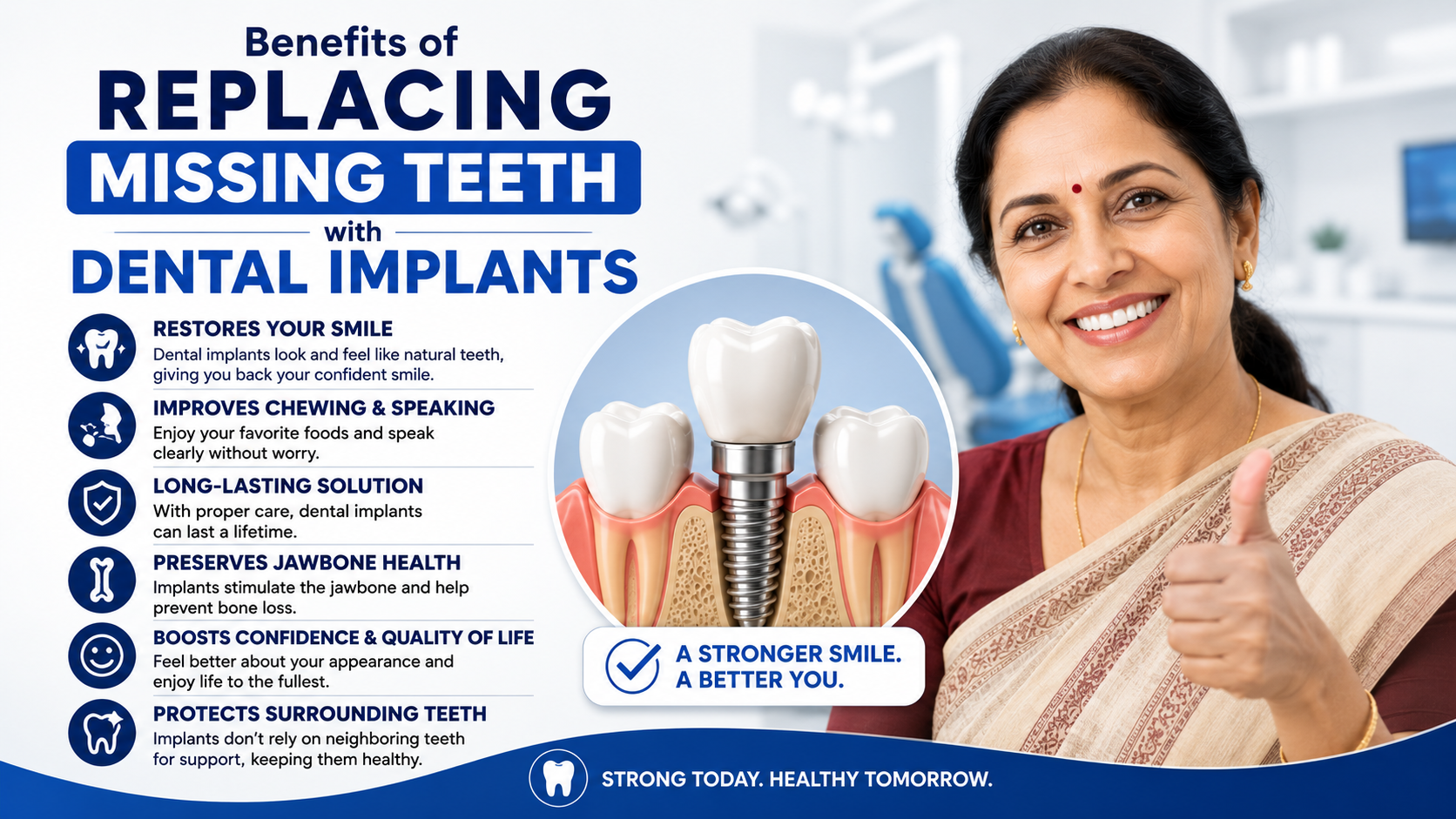
Benefits of Replacing Missing Teeth with Dental Implants
A missing tooth rarely stays a small, isolated problem. Over time, it can change how you bite, how you speak, and even how you feel about smiling in photos or at work. The good news is that you don't have to live with the gap or rely on temporary fixes. Dental implants have become the gold standard for tooth replacement because they offer stability, comfort, and a natural look that lasts. At a leading Dental Implant Clinic in Lucknow, patients are choosing implants over older alternatives for exactly this reason. If you've been putting off treatment, this guide — backed by insights from the Best Dentist in Lucknow — will walk you through why implants might be the right choice for you.
What Are Dental Implants?
In simple terms, a dental implant is a small screw-like post, usually made of titanium, that's placed directly into the jawbone where a tooth used to be. Over a few months, the bone naturally grows around the post and locks it into place — a process dentists call osseointegration. Once that foundation is secure, a custom crown is fixed on top, completing the look and function of a real tooth. Because the implant becomes part of the jawbone itself, it's classified as a true permanent tooth replacement, unlike removable devices that simply sit on the gums.
Common Problems Caused by Missing Teeth
- Difficulty chewing food properly, which can limit your diet over time
- Speech problems, such as slurring or whistling sounds when talking
- Bone loss in the jaw, as the bone shrinks without a tooth root to support it
- Teeth shifting out of position to fill the empty gap
- Reduced confidence and smile aesthetics, often making people hesitant to smile openly
Top Benefits of Replacing Missing Teeth with Dental Implants
1. Restores Natural Appearance
Each implant crown is custom-crafted to blend seamlessly with your surrounding teeth, so the result looks indistinguishable from natural enamel.
2. Improves Chewing and Eating Ability
Implants function much like real tooth roots, giving you the strength to bite into foods you may have avoided for years, from apples to nuts.
3. Prevents Jaw Bone Loss
Every time you chew, the implant transfers pressure to the jawbone, keeping it active and healthy — something dentures and bridges cannot do.
4. Preserves Facial Structure
Because bone density is maintained, patients avoid the hollowed, aged appearance that often develops after years of untreated tooth loss.
5. Prevents Adjacent Teeth from Shifting
An implant holds its place permanently, which keeps neighboring teeth from drifting into the gap and disrupting your bite alignment.
6. Long-Lasting and Durable Solution
Built to withstand daily wear, implants are designed to last decades when properly cared for, making them a smart long-term investment in your health.
7. Improves Speech Clarity
Since implants don't move or click like loose dentures sometimes do, patients often notice clearer, more confident speech soon after treatment.
8. Boosts Self-Confidence
A full, natural-looking smile can change how comfortable you feel in conversations, meetings, and everyday social interactions.
9. Easy Maintenance Compared to Dentures
There's no soaking, removing, or special cleaning solution required — just regular brushing and flossing, the same routine you'd use for natural teeth.
10. High Success Rate and Reliability
Backed by decades of clinical research, implants boast some of the highest long-term success rates in restorative dentistry, giving patients real peace of mind.
Why Dental Implants Are Better Than Dentures and Bridges
Traditional options like dentures and bridges have served patients for years, but they come with trade-offs. Dentures can shift while eating or speaking and typically need adhesive for a secure fit, while bridges require shaving down healthy neighboring teeth to anchor the restoration. Dental implants avoid both issues entirely — they stand on their own, leave adjacent teeth untouched, and deliver a level of comfort and chewing strength that's difficult to match. For anyone exploring serious tooth implant treatment, implants typically outperform these alternatives in both longevity and day-to-day comfort.
Who Is a Good Candidate for Dental Implants?
Generally, adults with healthy gums, sufficient jawbone volume, and good overall health are strong candidates for implants. Certain conditions, such as uncontrolled diabetes or heavy smoking, may need to be managed first, and patients with significant bone loss might require a bone graft before treatment. The only reliable way to know for sure is a thorough evaluation with the Best Dentist in Lucknow, who can review your medical history and oral condition to design a plan suited to you.
Why Choose a Dental Implant Clinic in Lucknow?
Working with an established implant dentist in Lucknow gives you access to precise diagnostic imaging, modern surgical techniques, and a team experienced in handling cases of varying complexity. Beyond the technology, a good clinic takes time to understand your specific needs, walks you through each stage of treatment, and follows up to ensure long-term success — turning what can feel like a daunting procedure into a smooth, well-supported experience.
Conclusion
A missing tooth affects more than appearance — it can quietly reshape how you eat, speak, and carry yourself day to day. Dental implants offer a dependable, natural-feeling way to reverse that, restoring both function and confidence for years to come. There's no reason to keep postponing treatment. Reach out to a trusted Dental Implant Clinic in Lucknow and schedule your consultation with the Rama Dental Clinic to start your journey toward a complete smile.
Frequently Asked Questions (FAQs)
1. How long does a dental implant typically last?
Most implants last well over 15 years, and many patients keep them for life with consistent oral hygiene and regular dental checkups.
2. Does getting a dental implant hurt?
The procedure is done under local anesthesia, so discomfort during surgery is minimal. Some mild swelling or soreness afterward is normal and manageable with medication.
3. How long is the recovery period after implant surgery?
Initial healing takes roughly one to two weeks, while full integration with the jawbone can take a few months before the permanent crown is attached.
4. Why are implants considered better than dentures?
Implants are fixed in place, feel more natural, and actively preserve jawbone density — something removable dentures aren't able to do.
5. Is everyone eligible for dental implants?
Most healthy adults with adequate bone structure qualify, though a dental evaluation is necessary to confirm suitability and rule out any complicating factors.
Don't wait to restore your smile. Get in touch today to book your dental implant consultation and take the first step toward lasting, confident results.
Explore More Blogs
Zinc series 1
Zinc is a nutrient that plays many vital roles in your body. Because your body doesn't naturally produce zinc, you must obtain it through food or supplements.
Read MoreWhat Is a Dental Implant and Who Needs It?
Losing a tooth can affect the way you eat, speak, and smile. It can also lower your confidence. But thanks to modern dental treatments, there's a strong and long-lasting way to replace missing teeth — dental implants.
Read MoreWhy Dental Implants Can Be Your Best Option?
Have you lost a tooth or multiple teeth through an accident or an oral disease? Do your missing teeth make it uncomfortable for you to laugh in public?.
Read More10 Signs You Need to Visit a Dentist Immediately
Don't ignore these 10 dental warning signs. Learn when to see the Best Dentist in Lucknow for urgent oral health care.
Read More